

When Other Treatments Have Failed, There Is Hope with TMS
Transcranial magnetic stimulation therapy uses short pulses of magnetic fields to stimulate nerve cells in the area of the brain thought to control mood. It is sometimes referred to as rTMS which stands for repetitive transcranial magnetic stimulation. NeuroStar TMS Therapy ® is an outpatient procedure. TMS patients receiving TMS Therapy remain awake and alert during the procedure.
Columbia Mental Health is proud to partner with NeuroStar to provide transcranial magnetic stimulation (TMS) as a treatment option for our clients. It is FDA-cleared to treat depression, depression with anxiety, and OCD. Most major insurance plans cover NeuroStar TMS, including Medicare and Tricare plans nationwide.
TMS uses focused magnetic pulses, similar in strength to an MRI, to revitalize underactive areas of the brain involved in regulating mood. It is not electroconvulsive therapy (ECT), “shock therapy,” or surgery.
NeuroStar TMS Therapy is:
- Noninvasive, meaning that it does not involve surgery. It does not require any anesthesia or sedation, as the patient remains awake and alert during the treatment.
- Nonsystemic, meaning that it is not taken by mouth and does not circulate in the bloodstream throughout the body.
- FDA cleared for patients who have not benefited from prior antidepressant treatment.
How NeuroStar® TMS Can Help
NeuroStar® TMS has helped thousands of people with depression get relief from their depression symptoms.
8.2
million NeuroStar Advanced TMS treatments have been performed in over 223,000 patients
83%
of patients experience an improvement in the severity of their depression
62%
of patients show complete remission
Neurostar® TMS can offer hope to those who have struggled to find relief from their depression symptoms.
If you have been diagnosed with major depressive disorder (MDD) and have not experienced relief from antidepressants, NeuroStar® TMS might be right for you. NeuroStar® TMS treatment is also covered by insurance for more than 300 million people.
How NeuroStar TMS Therapy Works
Through a magnetic coil, the NeuroStar TMS Therapy system generates highly concentrated, magnetic fields which turn on and off very rapidly. These magnetic fields are the same type and strength as those produced by a magnetic resonance imaging (MRI) machine. The treatment coil is applied to the head above the left prefrontal cortex. This part of the brain is involved with mood regulation, and therefore is the location where the magnetic fields are focused.
TMS treatment is conducted in one of our Columbia Mental Health clinics. You will meet with our team for a consultation to determine your eligibility. Depending on your provider’s recommendation, a typical TMS treatment plan includes 36 sessions that each last between 19–37 minutes. Completing the full treatment course gives the best chance for delivering long-lasting relief from depression.
Treatment Procedure
Your First Treatment Session
Because your TMS-certified physician needs to determine how to most effectively administer treatment, your first session could last up to an hour and a half. You will be provided and asked to wear protective earplugs, as the system emits a tapping sound during operation.
Your TMS physician will first perform a test to identify your motor threshold. The motor threshold is the amount of magnetic field strength that results in a movement of your right thumb. This test is important because it identifies the magnetic field strength that will be used in your treatment. This field strength is customized for each patient to deliver the correct treatment dose.
After this initial procedure, the TMS physician will determine the place on your head where the TMS treatment will be applied and the magnetic coil will be moved to that location.
After the Procedure
During or after treatment, you may experience a headache or discomfort at the site of stimulation. These are common side effects that often improve as further treatment sessions are administered. If necessary, you can treat this discomfort with an over-the-counter analgesic. If these side effects persist, your TMS physician can temporarily reduce the strength of the magnetic field pulses being administered in order to make treatment more comfortable.
In clinical trials, most patients who benefited from NeuroStar TMS Therapy experienced results by the fourth week of treatment. Some patients may experience results in less time, while others may take longer. You should discuss your depression symptoms with your physician throughout the treatment course. If symptoms persist, you may want to consider other antidepressant options.
Ongoing Process
- Before treatment – You’ll recline comfortably in the treatment chair. A curved magnetic coil will be positioned on your head.
- During treatment – You’ll hear a clicking sound and feel a tapping sensation on your head as the NeuroStar coil focuses treatment precisely at the source of the depression: the brain. The patented Contact Sensing technology ensures the prescribed dose is delivered, every treatment, every pulse.
- After treatment – With NeuroStar TMS, you are fully awake and alert during treatment and may drive home and resume daily activities immediately afterward. There are no negative effects on memory or sleep.
These magnetic fields do not directly affect the whole brain; they only reach about 2 to 3 centimeters into the brain directly beneath the treatment coil. As these magnetic fields move into the brain, they produce very small electrical currents. These electrical currents activate cells within the brain which are thought to release neurotransmitters like serotonin, norepinephrine, and dopamine. Since depression is thought to be the result of an imbalance of these chemicals in the brain, TMS can restore that balance and, thus, relieve depression.
With Columbia Mental Health, you’re supported every step of the way on your journey to regain control and live a fulfilling life free from the constraints of depression.
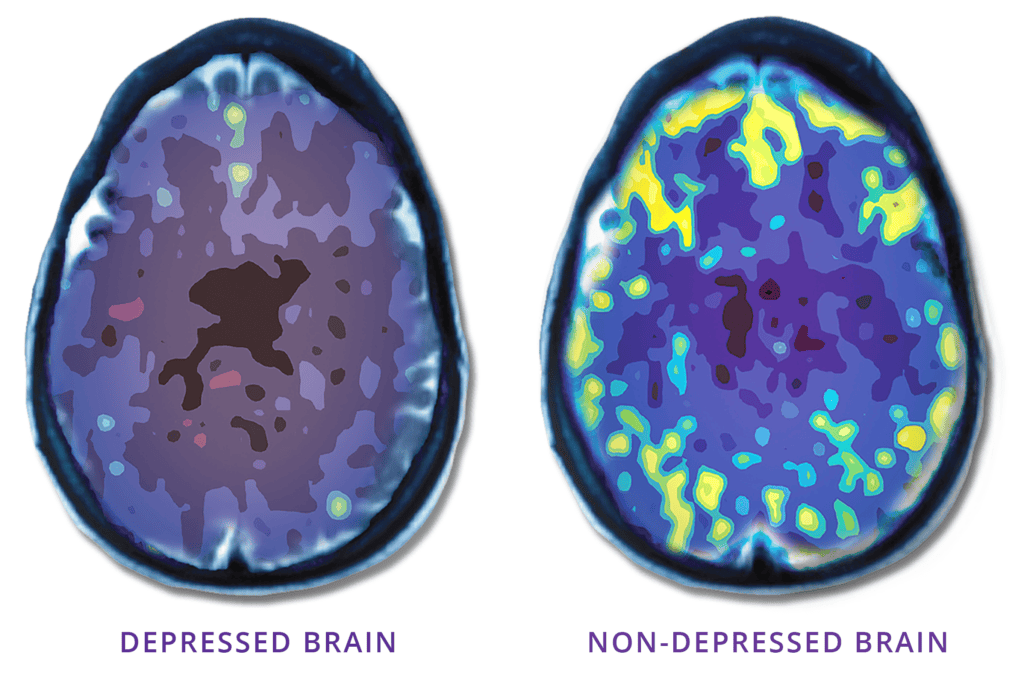
Find out if NeuroStar® TMS is right for you.
NeuroStar® TMS Efficacy
 Clinical trials have demonstrated the effectiveness of NeuroStar® TMS Therapy in treating patients who have not benefited from prior antidepressant medication. NeuroStar TMS Therapy was studied in adult patients suffering from Major Depressive Disorder, all of whom had not received satisfactory improvement with previous treatments.
An Effective and Durable Option for Treating Major Depressive Disorder
In an independent, randomized, controlled trial funded by the National Institute of Mental Health, 307 patients were treated with the NeuroStar TMS System for 4 to 6 weeks, similar to real clinical context. Patients were divided into two groups:
- Low Treatment Resistance: Patients who have failed to improve their depression symptoms after a single antidepressant treatment of adequate dose and duration.
- High Treatment Resistance: Patients who have failed to improve their depression symptoms after a multiple (2-14) antidepressant treatments of adequate dose and duration.
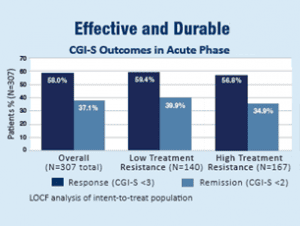 At the end of their treatments, patients who had received NeuroStar TMS Therapy were four times more likely to achieve remission compared to patients receiving a sham treatment. One in two patients experienced significant improvement in their depression symptoms and one in three experienced complete remission.
Patients treated with the NeuroStar TMS System also experienced significant improvement in anxiety and physical symptoms (such as appetite changes, aches and pains, and lack of energy) associated with depression.
Durability of TMS Treatments
NeuroStar TMS is the only TMS system with the durability of its effects established over 12 months. In a trial with physician directed standard of care, meaning Neurostar TMS Therapy could be used in conjunction with antidepressants as needed, patients who had received treatment then reported their symptom levels at 3, 6, 9 and 12 months to determine the durability of their treatments.
By the end of the 12-month period, 2 out of 3 patients who had either responded or completely remitted after TMS treatment remained at the symptom levels they reported at the end of the treatment phase.1 After the end of the treatment period, only 1 in 3 patients needed to come back for maintenance TMS sessions, or “reintroduction” during this 12-month period.1
Treatment Algorithm
Additionally, Neuronetics has developed a new tool to use in educating patients on the best practices of treating depression. The Best Practices Treatment Guideline for Depression has been developed to help patients understand TMS therapy as an option if their first line antidepressant medications stop working.
This guideline is based on the 2010 American Psychiatric Association’s practice guidelines and NeuroStar TMS Therapy indication for use, which says: NeuroStar TMS Therapy is indicated for the treatment of major depressive disorder in adult patients who have failed to achieve satisfactory improvement from prior antidepressant medication at or above the minimal effective dose and duration in the current episode.
Please see the Treatment Algorithm for an effective illustration of the use of NeuroStar TMS Therapy early on in the treatment of depression. NeuroStar TMS Therapy has not been studied in patients who have not received prior antidepressant treatment.
Those considering Transcranial magnetic stimulation can connect with patients who have had the treatment to answer questions, share insights, and get the latest information.
Frequently Asked Questions
What is TMS?
TMS stands for “transcranial magnetic stimulation.” NeuroStar TMS uses focused magnetic pulses (similar in strength to an MRI), to revitalize underactive areas of the brain involved in regulating mood. When these regions are underactive, depression can result. “Waking up” these regions can have a lasting effect on depression, making long-term remission from depression a reality for many people.
How does TMS Therapy work?
During TMS Therapy, a magnetic field is administered in very short pulses to the part of the brain that research has demonstrated to be associated with depression. A typical course of TMS Therapy is 5 times per week for 19-37 minutes sessions, depending on what the doctor determines is the correct protocol, over 4-6 weeks. Any additional treatments are based on clinical judgment.
Does it work?
A real-world study reported an 83% response rate. This means that 83% of patients that completed their NeuroStar TMS treatment cycle saw measurable improvement in their depression symptoms. The same real-world study reported a 62% remission rate. This means that 62% of patients that completed their NeuroStar TMS treatment cycle likely wouldn’t be diagnosed with MDD if they were first being evaluated by their doctor.
Is TMS safe?
Yes, TMS is a safe and FDA-cleared treatment for depression, depression with anxiety, and OCD. Over 6.9 million NeuroStar Advanced TMS treatments have been performed in over 188,000 patients, and less than five percent of clients reported any side effects. The most common side effect is a headache right after TMS treatment, which goes away after the first week of sessions for most people.
Does TMS hurt?
The most common side effect with NeuroStar is mild to moderate pain or discomfort at the treatment site. For most patients this subsides within the first week of treatment. If necessary, you can treat this discomfort with an over-the-counter analgesic. If these side effects persist, your doctor can temporarily reduce the strength of the magnetic field pulses being administered in order to make treatment more comfortable. Less than 5% of patients treated with NeuroStar TMS Therapy discontinued treatment due to side effects.
Is TMS covered by my insurance?
Most major insurances cover NeuroStar TMS, including Medicare plans nationwide. It usually takes time for healthcare insurers to establish coverage policies for newly approved treatments such as NeuroStar TMS. However, many commercial and Medicare plans have recognized the effectiveness of treating depression with TMS Therapy and now cover TMS as part of their plans. See our full list of insurance plans that cover TMS.
What ages can receive NeuroStar® TMS?
Adults aged 22–70. Adolescents aged 15–21 are eligible for TMS as an add-on therapy.
What conditions can TMS treat?
NeuroStar TMS is FDA-cleared for the treatment of major depressive disorder (MDD) in adults 22–70, as an add-on therapy for adolescents aged 15–21, and for the treatment of obsessive-compulsive disorder (OCD) in adults aged 22–70.
Is TMS Therapy a good alternative for patients who cannot tolerate the side effects associated with antidepressant medications?
NeuroStar® is non-systemic (does not circulate in the blood throughout the body), so it does not have side effects such as weight gain, sexual dysfunction, nausea, dry mouth, sedation, etc. The most common side effects reported during clinical trials were headache and scalp discomfort – generally mild to moderate – occurring less frequently after the first week of treatment.
Is TMS Therapy like other alternative therapies that use magnets to treat some illnesses?
No. TMS Therapy involves a unique method of using pulsed magnetic fields for therapeutic benefit. The intensity of the magnetic field is similar to that of the magnetic fields used in magnetic resonance imaging, or MRI. These techniques differ radically from the popular use of low-intensity, static magnetic fields. These products deliver weak and undirected static fields that are not capable of activating brain cells.
Is TMS Therapy like electroconvulsive therapy (ECT)?
No, the two procedures are very different. While both are effective in the treatment of depression, there are many differences in safety and tolerability. During TMS Therapy, patients sit in a chair and are awake and alert throughout the entire 19-37 minute procedure – no sedation is used with TMS Therapy. Patients can transport themselves to and from treatment. In over 10,000 active treatments with the NeuroStar TMS Therapy system in clinical trials, no seizures were observed. TMS Therapy was also shown to have no negative effects on memory function in these studies. In contrast, “shock therapy,” or electroconvulsive therapy (ECT), intentionally causes a seizure. Patients receiving ECT must be sedated with general anesthesia and paralyzed with muscle relaxants. Recovery from an ECT treatment session occurs slowly, and patients are usually closely monitored for minutes or a even few hours after a treatment. Short-term confusion and memory loss are common with ECT, and long-term disruptions in memory have been shown to occur and may persist indefinitely in some people. Because of the side effects associated with ECT, a significant amount of caregiver support is required.
What are the potential risks of NeuroStar TMS Therapy?
NeuroStar TMS Therapy has been shown to be well-tolerated, and the Neurostar TMS Therapy system has been demonstrated to be safe in clinical trials. Throughout over 10,000 active treatments performed in clinical trials, the most commonly reported side effect related to treatment was scalp discomfort during treatment sessions. This side effect was generally mild to moderate and occurred less frequently after the first week of treatment. Less than 5% of patients treated with NeuroStar TMS Therapy discontinued treatment due to side effects. In NeuroStar clinical trials, over 10,000 TMS treatments demonstrated its safety, with no occurrence of seizures. However, there is a small risk of a seizure occurring during treatment. This risk is no greater than what has been observed with oral antidepressant medications. While NeuroStar TMS Therapy has been demonstrated to be effective, not all patients will benefit from it. Patients should be carefully monitored for worsening symptoms, signs or symptoms of suicidal behavior, and/or unusual behavior. Families and caregivers should also be aware of the need to observe patients and notify their treatment provider if symptoms worsen.
Can NeuroStar TMS Therapy cause brain tumors?
No, NeuroStar TMS Therapy uses the same type and strength of magnetic fields as MRIs (magnetic resonance imaging), which have been used in tens of millions of patients around the world and have not been shown to cause tumors. The magnetic energy used in a full course of TMS Therapy is a small fraction of just one brain scan with an MRI.
Does TMS Therapy cause memory loss?
No, the NeuroStar TMS Therapy system was systematically evaluated for its effects on memory. Clinical trials demonstrated that NeuroStar TMS Therapy does not result in any negative effects on memory or concentration.
How long does the antidepressant effect last?
NeuroStar TMS is the only TMS system with the durability of its effects established over 12 months.
Will I need any therapy beyond the first treatment regimen?
In a clinical trial, 2 out of 3 patients who had either responded to treatment or completely remitted their depression symptoms reported 12 months later that they remained at the level they were at the end of the trial. Additionally, after the trial, only 1 in 3 patients needed to return for “maintenance” TMS sessions.
Can I also take antidepressant(s) if I am receiving NeuroStar TMS Therapy?
Yes. In clinical trials, NeuroStar TMS Therapy was safely administered with and without other antidepressant medications.
Does FDA-clearance of the NeuroStar TMS Therapy system mean that all TMS devices are cleared for use in major depression within the United States?
No, the NeuroStar TMS Therapy system is the first TMS device to be cleared by the U.S. Food and Drug Administration (FDA) for the treatment of major depression. The NeuroStar TMS Therapy system is also the first TMS device to have been evaluated in a large, multicenter, controlled clinical trial, as well as the only TMS system with the durability of its effects over 12 months established.
TMS Therapy for Adolescent Depression Treatment
Neurostar® TMS is a promising option, available to adolescents aged 15–21 as an add-on therapy for treatment-resistant depression (TRD). We understand that managing depression can be incredibly challenging for young people, and our team is dedicated to supporting families through every step of the treatment process. NeuroStar® provides a non-invasive and non-systemic approach to targeting the areas of the brain that affect mood regulation. TMS therapy significantly alleviates depressive symptoms without the side effects commonly associated with antidepressant medications.
At Columbia Mental Health, our caring professionals are trained to deliver this advanced therapy, ensuring a supportive and nurturing environment for adolescents undergoing TMS therapy. Call us at 703.682.8208 or complete the TMS form to learn more about our treatment options.


Find out if NeuroStar® TMS is right for you.
Discover How NeuroStar® TMS Can Improve Your Life
At Columbia Mental Health, we’re here to help you find the proper depression treatment. We are proud to offer a full suite of mental health services, including therapy and psychiatric medication management, as well as alternative treatment options for depression like NeuroStar® TMS and Spravato®. This collaborative, multidisciplinary approach allows our team to create an individualized treatment plan that is tailored to you.
If you’re ready to take the next step in your mental health journey, consider NeuroStar® TMS. With TMS, you may finally discover the relief you’ve sought. Call us at 703.682.8208 or complete the TMS form.
Indication Statement
The NeuroStar® Advanced Therapy system is indicated for the treatment of depressive episodes and for decreasing anxiety symptoms for those who may exhibit comorbid anxiety symptoms in adult patients suffering from major depressive disorder and who failed to achieve satisfactory improvement from previous antidepressant medication treatment in the current episode.
The NeuroStar® Advanced Therapy system is intended to be used as an adjunct for the treatment of adult patients suffering from obsessive-compulsive disorder.
NeuroStar® Advanced Therapy is only available by prescription. A doctor can help decide if NeuroStar® Advanced Therapy is right for you. Patients’ results may vary.
TMS Safety & Side Effects
 Clinical trials have demonstrated the safety of NeuroStar TMS Therapy® in treating patients who have had an inadequate response to prior antidepressant medications.
Treatment with NeuroStar TMS Therapy caused very few side effects and was generally well tolerated by patients. The most common side effect reported during clinical trials was scalp discomfort—generally mild to moderate and occurring less frequently after the first week of treatment.
Fewer than 5% of patients discontinued treatment with NeuroStar® TMS Therapy due to adverse events. Over 10,000 active treatments were performed across all NeuroStar clinical trials, demonstrating its safety.
- No systemic side effects
- No weight gain
- No sexual dysfunction
- No sedation
- No nausea
- No dry mouth
- No adverse effects on concentration or memory
- No drug interactions
- NeuroStar TMS Therapy should not be used in patients with implanted metallic devices or non-removable metallic objects in or around the head. This does not include metallic fillings in teeth.
- NeuroStar TMS Therapy should not be used in patients with implants controlled by physiological signals. This includes pacemakers, implantable cardioverter defibrillators (ICDs), and vagus nerve stimulators (VNS).
The most common side effect is pain or discomfort at or near the treatment site. These events are transient; they occur during the TMS treatment course and do not occur for most patients after the first week of treatment. There is a rare risk of seizure associated with the use of TMS therapy (<0.1% per patient).
Visit NeuroStar.com for full safety and prescribing information.
TMS Therapy Insurance Coverage
Since FDA clearance of TMS in 2008, insurance coverage for eligible patients has increased significantly. Currently, there are over 60 coverage polices for TMS, including most Medicare contractors. Although TMS is not a first line of treatment, it is an alternative option for those who are not responding to or cannot tolerate medications. Patients are encouraged to speak directly with their doctor regarding any specific insurance questions. Patients can also contact a reimbursement specialist and receive assistance with understanding insurance coverage and verifying insurance benefits. For a list of the insurance companies and applicable states that cover TMS therapy, please click here.
TMS Media Coverage
Transcranial Magnetic Stimulation (TMS) has been featured in several prominent news publications highlighting its success in treating depression. Among these publications are: National Geographic, Scientific American, Psychiatric Times, Harvard Health, Men’s Health, and Forbes.
See below for more news stories discussing the latest applications of TMS Therapy.
- 01/09/2020 Psychiatric Times: Bipolar Disorder: Practice-Changing Trials from 2019
- 12/16/2019 Cision: Advanced Treatment For Depression Without Medication
- 12/04/2019 Fox5: After 20 years of depression, Georgia woman finds a breakthrough: TMS
- 11/11/2019 News9: Life-changing treatment
- 10/28/2019 News 5: TMS provides hope for depression patients
- 09/16/2019 World Health: TMS May Prevent Age Related Memory Decline
- 09/09/2019 Medical News Today: dTMS may help where other therapies fail
- 08/28/2019 Medical Xpress: Veterans in TMS for PTSD Study
- 08/13/2019 BBR Foundation: Combining TMS with Psychotherapy for Treating Depression and OCD
- 08/12/2019 Observer: Using a technology-based program to treat depression
- 08/01/2019 Cision: First TMS Patient Treated Under New Japan Reimbursement Policy
- 07/22/2019 Healio: TMS can offer relief from anxiety
- 07/08/2019 Cision: NeuroStar® Patient Outcomes Registry is Now The World’s Largest in Major Depressive Disorder
- 07/01/2019 Gazette: Treating major depression with eight weeks of TMS treatment
- 06/24/2019 Chron: Psychiatrist offers new treatment options for depression
- 06/18/2019 Harvard Health: An underused option for severe depression
- 06/17/2019 BioSpectrum: Teijin Pharma starts sale of TMS device in Japan
- 06/13/2019 Tennessean: Here are three things everyone gets wrong about depression
- 06/05/2019 Country Living: Everything you need to know about brain fog
- 05/14/2019 Cision: Survey Finds Majority of Americans Don’t Feel Equipped to Discuss Depression With Loved Ones
- 05/09/2019 Open Access Gov: Maternal Mental Health Treatments for Postnatal depression
- 05/06/2019 NorthJersey: Help is on the way for those who suffer
- 05/03/2019 PsychAdvisor: rTMS Effective for Depression, Anxiety
- 04/05/2019 St George News: Two Southern Utah providers offer new alternative for treating depression
- 04/03/2019 Spokesman-Review: TMS treatment and increasing mental health dialogue
- 03/29/2019 El Paso Inc: How TMS therapy pulled me out of depression
- 03/28/2019 MedTechDive: Neuronetics gets Japanese coverage for TMS Therapy
- 03/08/2019 Psychology Today: New Inventions for Treating Depression
- 02/21/2019 WBTV: Woman battling 20-year depression finds relief from little-known treatment
- 02/05/2019 MD Mag: Exploring TMS Therapy for Depressed Patients
- 02/05/2019 WTSP: Medication-free therapy shows promising results for treating depression
- 01/30/2019 WFLA: Breakthrough treatment for depression available
- 01/27/2019 Spokesman-Review: Mental-health journey a positive work in progress
For more news articles featuring TMS, please see this Press Coverage page.
Clinical and Academic References
- Carpenter LL, et al. (2012). Transcranial Magnetic Stimulation (TMS) for Major Depression: A Multisite, Naturalistic, Observational Study of Acute Treatment Outcomes in Clinical Practice. Depression and Anxiety, 29(7):587-596. www.ncbi.nlm.nih.gov/pubmed/22689344
- George MS, et al. (2010). Daily Left Prefrontal Transcranial Magnetic Stimulation Therapy for Major Depressive Disorder: A Sham-Controlled Randomized Trial. Arch Gen Psychiatry, 67(5):507-516. www.ncbi.nlm.nih.gov/pubmed/20439832
- Dunner DL, et al. (2014). A Multisite, Naturalistic, Observational Study of Transcranial Magnetic Stimulation (TMS) for Patients with Pharmacoresistant Major Depressive Disorder: Durability of Benefit Over a 1-Year Follow-Up Period. J Clin Psychiatry, 75(12):1394-1401. www.ncbi.nlm.nih.gov/pubmed/25271871
- O’Reardon JP, et al. (2007). Efficacy and Safety of Transcranial Magnetic Stimulation in the Acute Treatment of Major Depression: A Multisite Randomized Controlled Trial. Biol Psychiatry, 62(11):1208-1216. www.ncbi.nlm.nih.gov/pubmed/17573044
- Carpenter LL, et al. (2012). Depress Anxiety, 29(7):587-596.
- Janicak, P, et al. Transcranial Magnetic Stimulation (TMS) in the Treatment of Major Depression: A Comprehensive Summary of Safety Experience from Acute Exposure, Extended Exposure and During Reintroduction Treatment. Journal of Clinical Psychiatry, February 2008.